Spellbook: Sunflowers
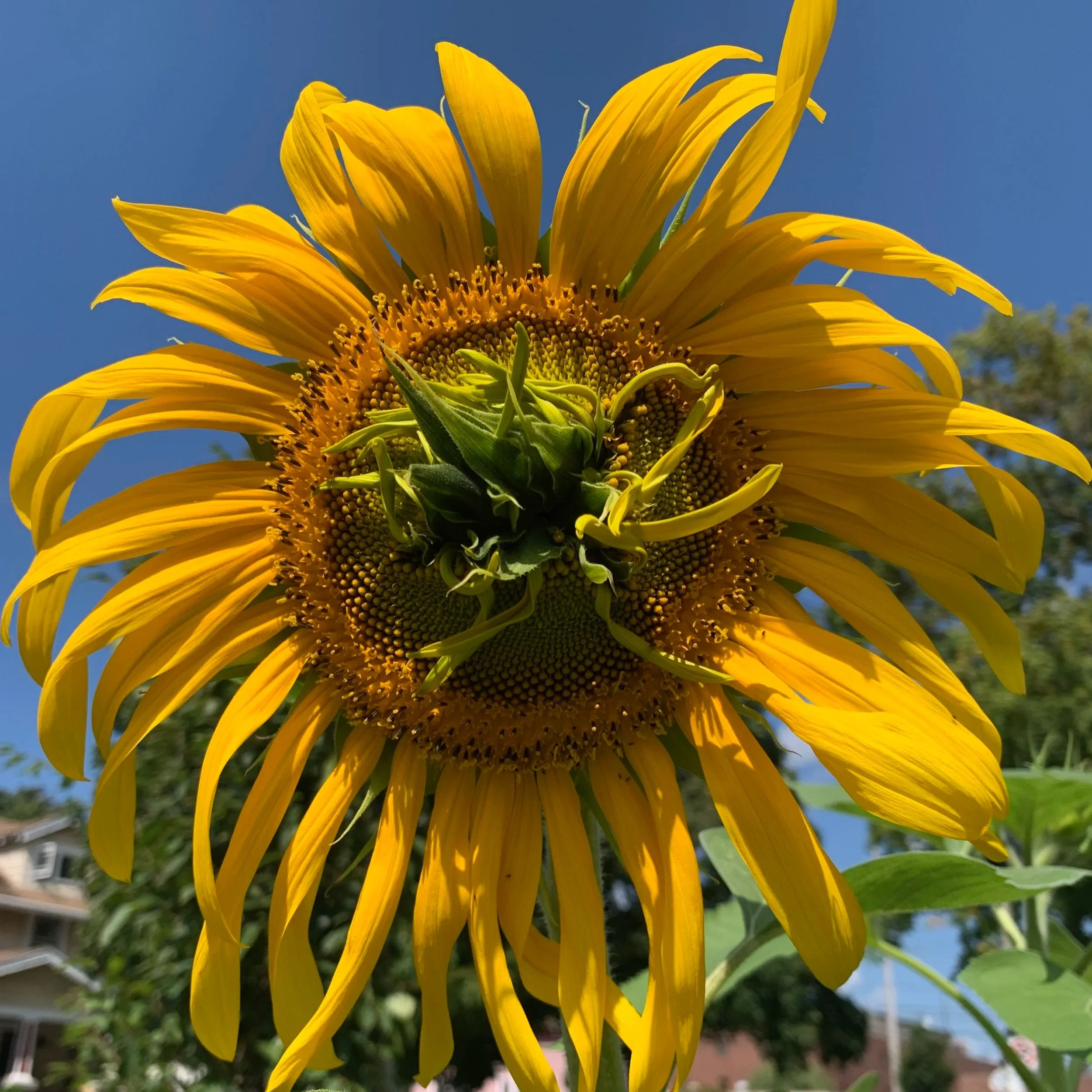
How to Grow: Sunflowers
Mother Plant’s sustainable guide to gardening and farming for sensitive souls.
Content Overview
About the Plant
Plant ID
Grow Guide
Harvesting Help
About the Flower
Cultivar List
About the Cultivar
References
TLDR/Must-Know’s
Sunflowers release a specific toxin that specific plants have sensitivity towards. Sunflowers use lots of nutrients and water, so be mindful when planting near other crops.
Sunflowers are easy to grow once established in well-drained soil. The sunflower’s roots are tender and require direct sowing. The more water and sun a sunflower receives, the bigger and bolder the plant will become. Sunflowers are loved by finches and are great for detoxing and aerating the soil.
Your garden will thrive when you adapt your plant selections to match your growing space and habits. Every plant has different preferences for water, soil, light, and temperature. Every Genus (Flower) and cultivar (Flower Variation) has different germination and growing needs and impacts.
Mother Plant believes the barrier to botanical education is too high and is taking donations (Paypal,Venmo) to create more botanical resources!
Looking for your favorite plant to be covered in the next guide? Donate $25 (Paypal,Venmo) per plant to have your preferred flower, fruit, or veggie featured in the 2026 “How to Grow” series.
Purchase a digital sunflower grow guide here! (includes pdf, text, links to docs, and a pdf of her exclusive spellbook)
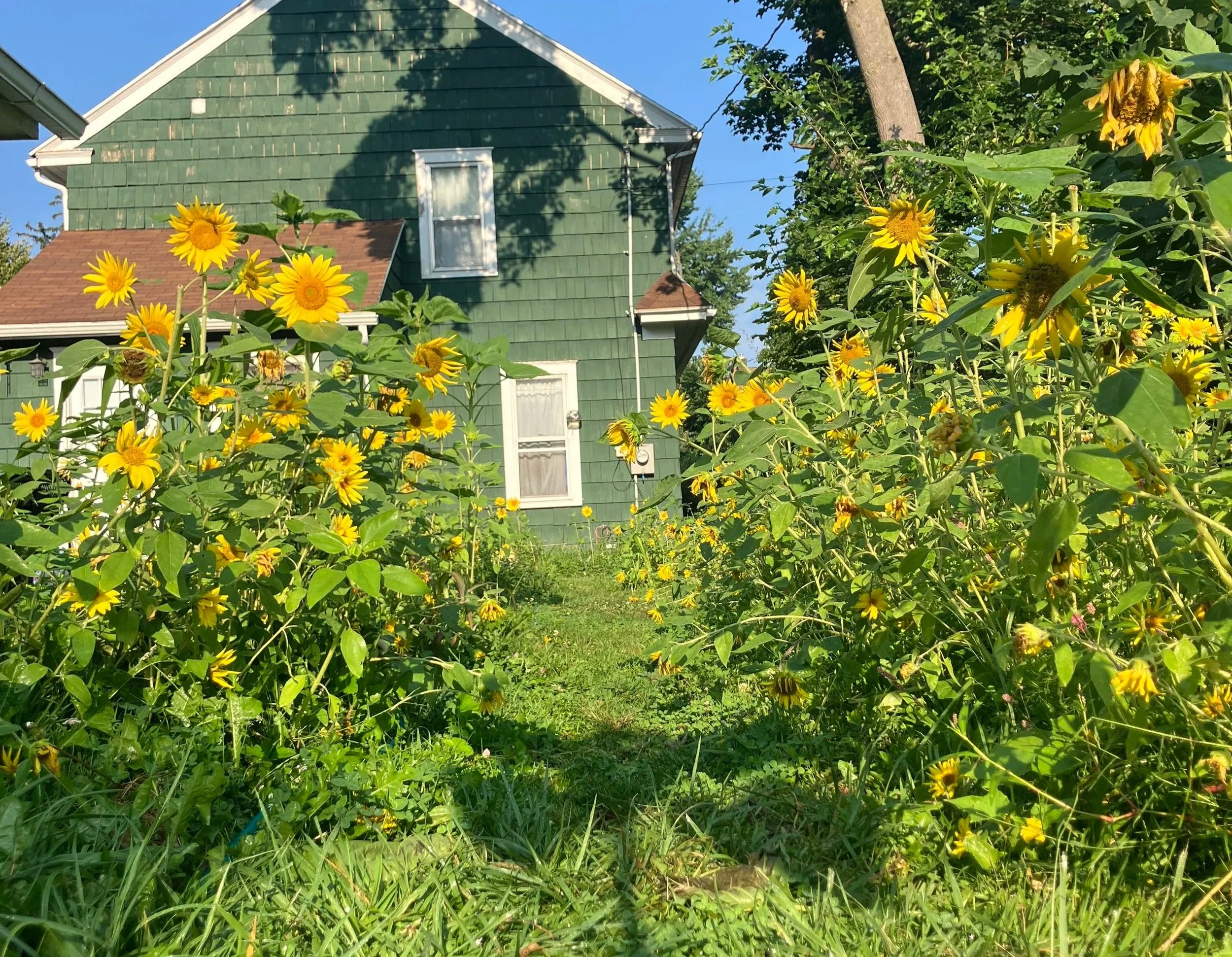
About the Plant
Common Sunflower Helianthus annuus
Plant Genealogy
Taxa: spermatophyte (produces seeds)
Division: Angiosperm (Seedling that flowers)
Group: Eudicot (2-seeded leaves, cotyledon Plants)
Order: Asterales
Family: Asteraceae (Contains 16 subfamilies)
Subfamily: Asteroideae (Contains 21 tribes)
Tribes: Helianthodae (Contains 35 Subtribes)
Subtribe: Helianthinae (Contains 20 Genera)
Genus: Helianthus (Contains 56 Species)
Species: Helianthus annuus
Cultivars: Over 50
Plant Facts
Toxicity: Nontoxic (Humans, cats, & dogs)
Plant Type: Annual, Edible, Woody Plant
Habit/Form: Erect
Growth Rate: Rapid
Maintenance: Low
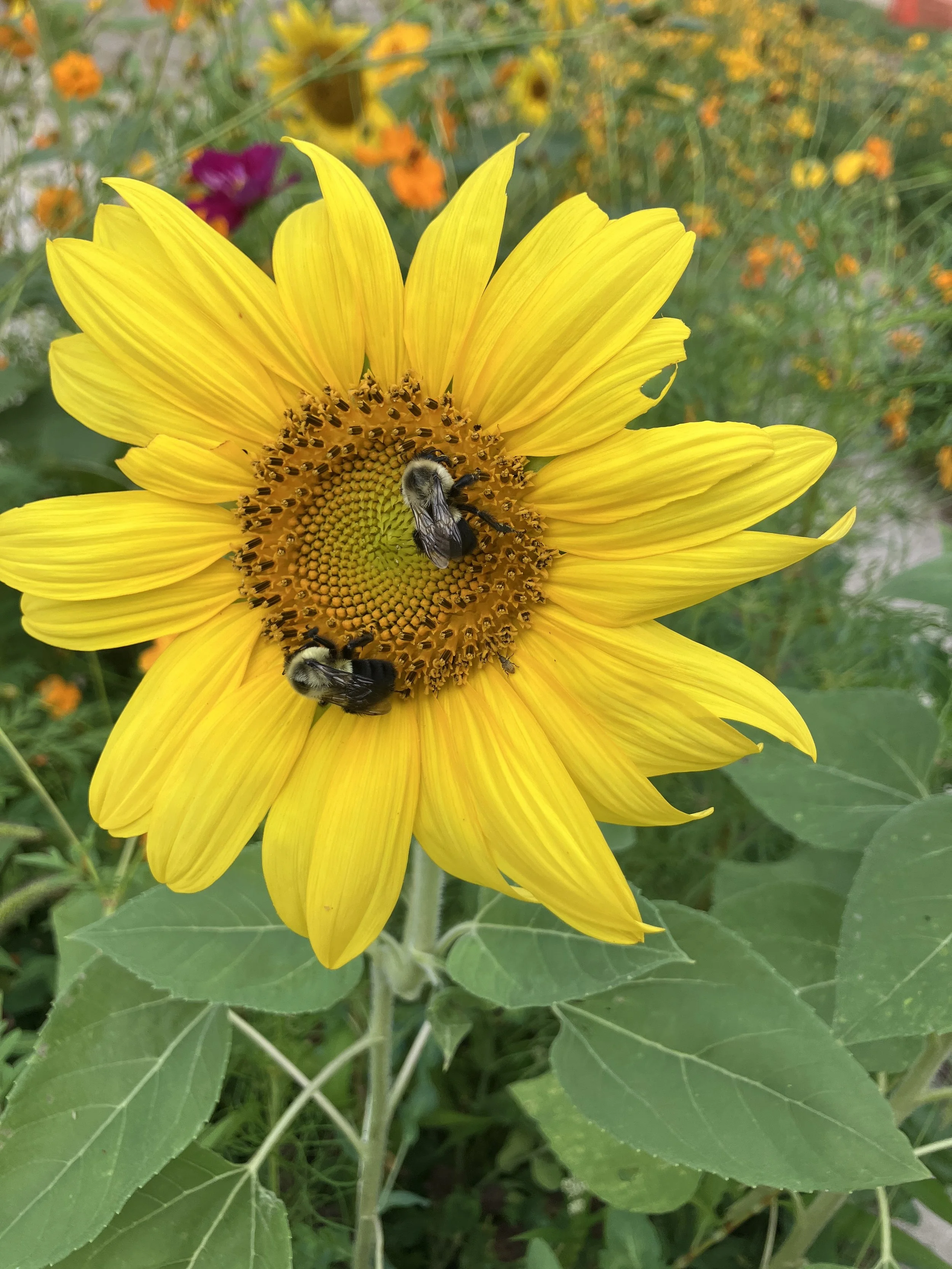
Host To: Bees, Butterflies, Finches
Companions: Corn, Cucumber, Beans, Morning Glory, Onion, Peas
Avoid: Brassicaceae Family, Hydrangea, Potato, Rhododendron
Diseases: Powdery Mildew, Downy Mildew Pests: Weevils, Aphids, Japanese Beetles
Native to: Western North America
Over 150 Generations of farmers have grown the sunflower in North America since 2300 BCE, but the precise origin location of the sunflower is unknown.
Adding sunflowers to the perimeter of your three-sisters garden can protect your corn & attract pollinators.
The Three Sisters method is an indigenous farming strategy that maximizes companion planting.
Sunflowers are considered the “fourth sister” to corn, squash, and beans.
To explore indigenous food traditions and recipes, visit natifs.org
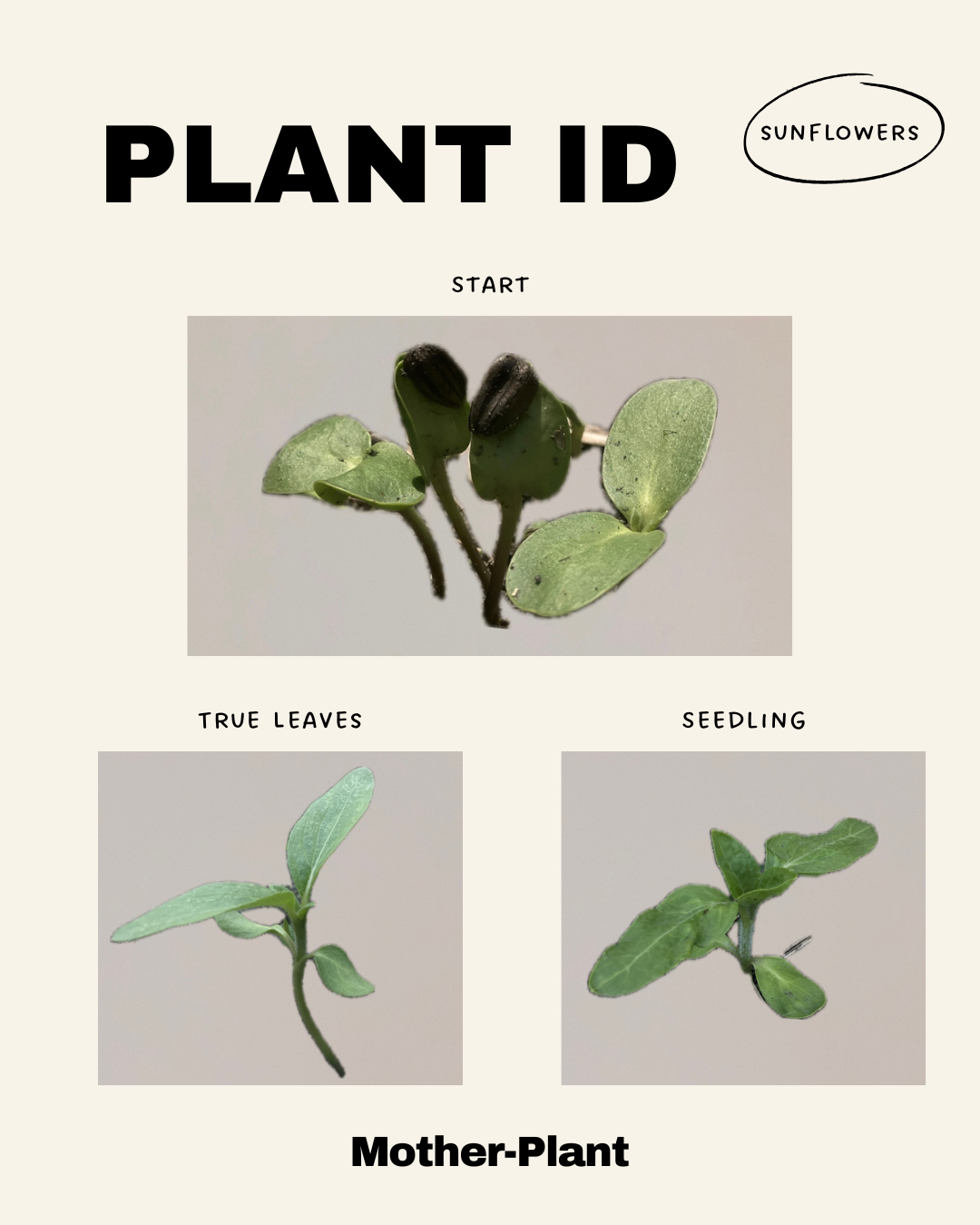
Sprout ID: Helianthus annuus
Plant Identification Basics
True leaves are ovate, oblong, and alternating.
Leaf Characteristics: Deciduous
Leaf Arrangement: Alternate
Leaf Shape: Lanceolate
Leaf Margin: Dentate
Leaf Texture: Coarse/Hairy
Seeds are oval, often striped white, gray, red, brown or black, and vary in size.
Grow Guide
Sunflower
Seedling Stats
Days to germinate: 7-10 days
Days to bloom: 70-100 days (10-14 weeks)
Days to seed harvest: 30-40 days after bloom
Soil temperature: 50f-80f
Soil type: well-drained, not compacted
Water: daily, 2x once above 75f
Light: as much as possible
Soil PH: 6-7.5 (slightly acidic)
Growing from Seed
Transplant: N/A the roots are fragile, mixed results using paper pots.
Direct sow: April - Early June
Plant two seeds, 1” deep, every 3 inches.
Seeds can be mass-planted using the scatter method.
Cover with straw, keep moist, water often.
Add generic fertilizer or tomato fertilizer monthly
Container Gardening
Plant 3-5 seeds 1inch deep, cover with straw.
Add rocks or logs to the bottom of your container to save on dirt and add weight to the pot.
Water thoroughly until the pot starts leaking out of the bottom.
Increase watering to 3x daily when temps are above 85f. sunflowers need more water than other flowers!
Select a pot at least 3ft tall (5 gallons+) when growing a plant that reaches over 5ft.
Guerilla Gardening
Seed: Black Oil (bird seed)
Date: Mid April - May (allows the seeds to get enough water from the rain and dew, they will be eaten by wildlife if scattered in the fall or winter)
Locations: Anywhere that isn’t mowed often (alleyways, fields, shoulders, abandoned lots)
Bed Locations
Sunflowers need at least six hours of sun. the more they receive, the taller they grow!
Save your cardboard and yard waste to make a bed in the fall with lasagna compost.
Adding used coffee grounds to the bed will help to increase the soil acidity & add nitrogen, just don’t let the coffee grounds directly touch your plants.
Leave the plants up during winter.
Rotate your crops and identify which plants are sensitive to sunflower allelopathy!
Growing Tips
Wait to plant in-ground until nighttime temps are consistently above 45f.
Sunflower roots do not grow very deep, but the flowers are very top-heavy.
Sunflowers can develop brown spots on their leaves if they do not get enough water, and yellow leaves if they get too much water.
Sunflowers feed heavily on three main nutrients: nitrogen, potassium, & phosphorus.
Add extra fertilizer or rotate the crop the following growing season.
Trimming the leaves off the sunflower’s stems can prevent powdery mildew.
Container Gardening Tips
Do not fill the pot fully with. Leave at least 3” from the top of the planter so there is space for the stems to grow within the pot.
Planters need more water than in-ground plants, and terracotta requires more water than plastic planters
Planters need at least 1 hole in the bottom
You can add items to the bottom of your planters to save on the amount of soil needed.
Create a greenhouse over your pot by taping a white/clear trash bag atop the planter, or create paper pots to start growing earlier.
Avoid bricks or cinder blocks, as they are more likely to release particles into the soil that could impact the soil ph.
Fun Facts
Sunflower seedlings can survive to 23f and mature plants will die at 28f.
Sunflowers are completely edible.
Sunflowers release a toxin that can damage some plants like broccoli and rhododendron.
Sunflowers can be found growing anywhere except the tundra, Dessert, & Rainforest.
Sunflowers are both Annuals and Perennials.
Sunflowers assist with removing metals, radiation, and other toxins in the soil.
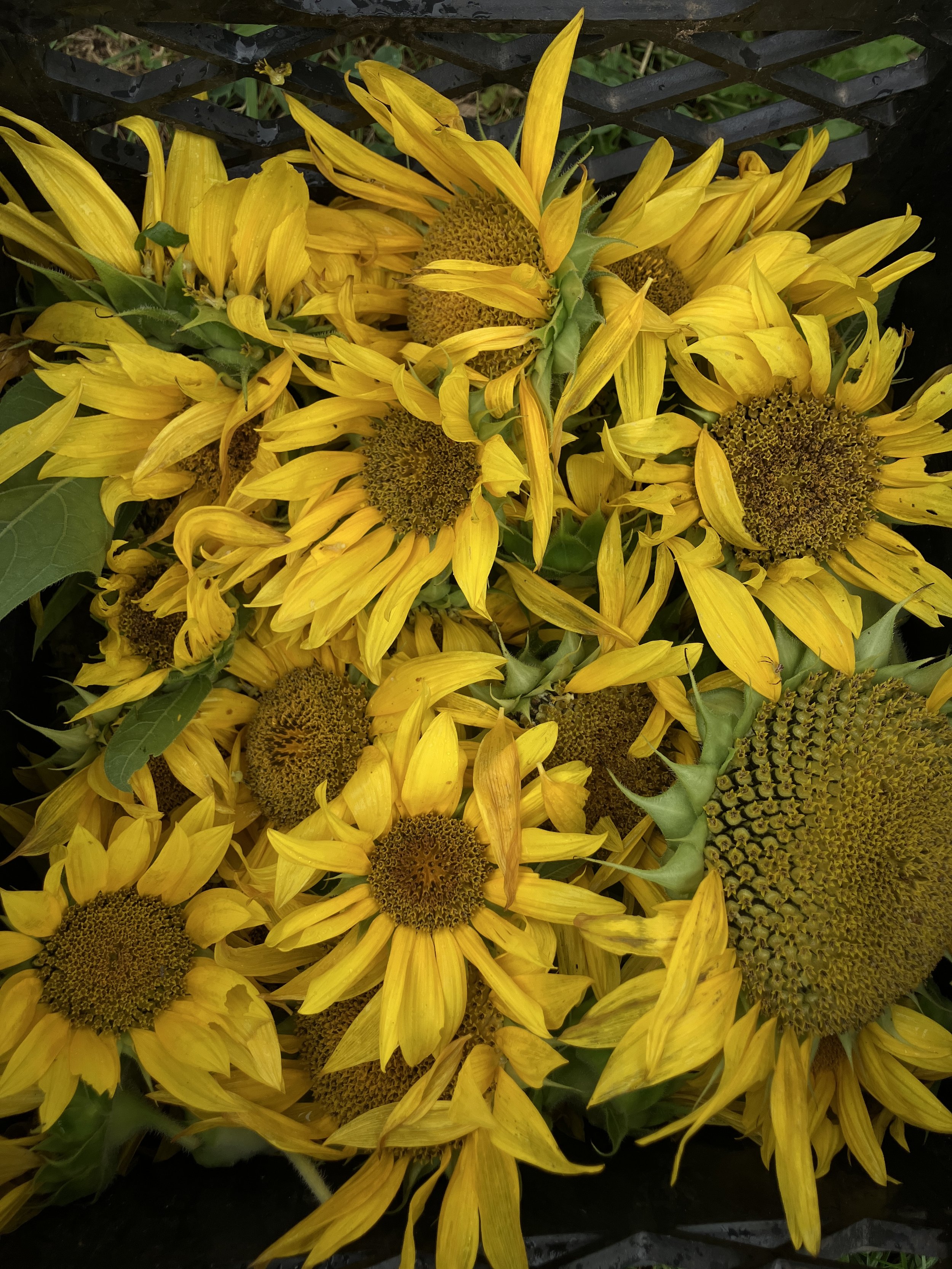
Harvesting Help
Flowers
Cut & Arrange just as petals open.
Place by bright indirect light
Petals are colorfast & won’t fade
Seeds
Cut the head once the flower is dead & dry.
Store out of heat and light, either on the head or just the seeds, in a container.
Heads
Cut once petals start to wilt, but before sunflower seeds dry, for the tastiest results.
To explore recipes, visit natifs.org
Cut Flower Processing and Care
Lasting Quality: 7-10 Days, Flowers are colorfast, dry well.
Include treatment in a hydrating solution to facilitate water uptake.
After harvest, trim off al leaves re-cut stems and place the flowers in a clean water solution
Change water solution every 2 days, using distilled water that is appx 105f/40c.
Place cut flowers in bright, indirect light.
4' from north window
up to 8' from south window
up to 5' from east or west window
can be closer to windows with curtains
Change the solution in your vase every two days and re-cut the ends of the stems to promote longer vase life.
About the Flower
Florets
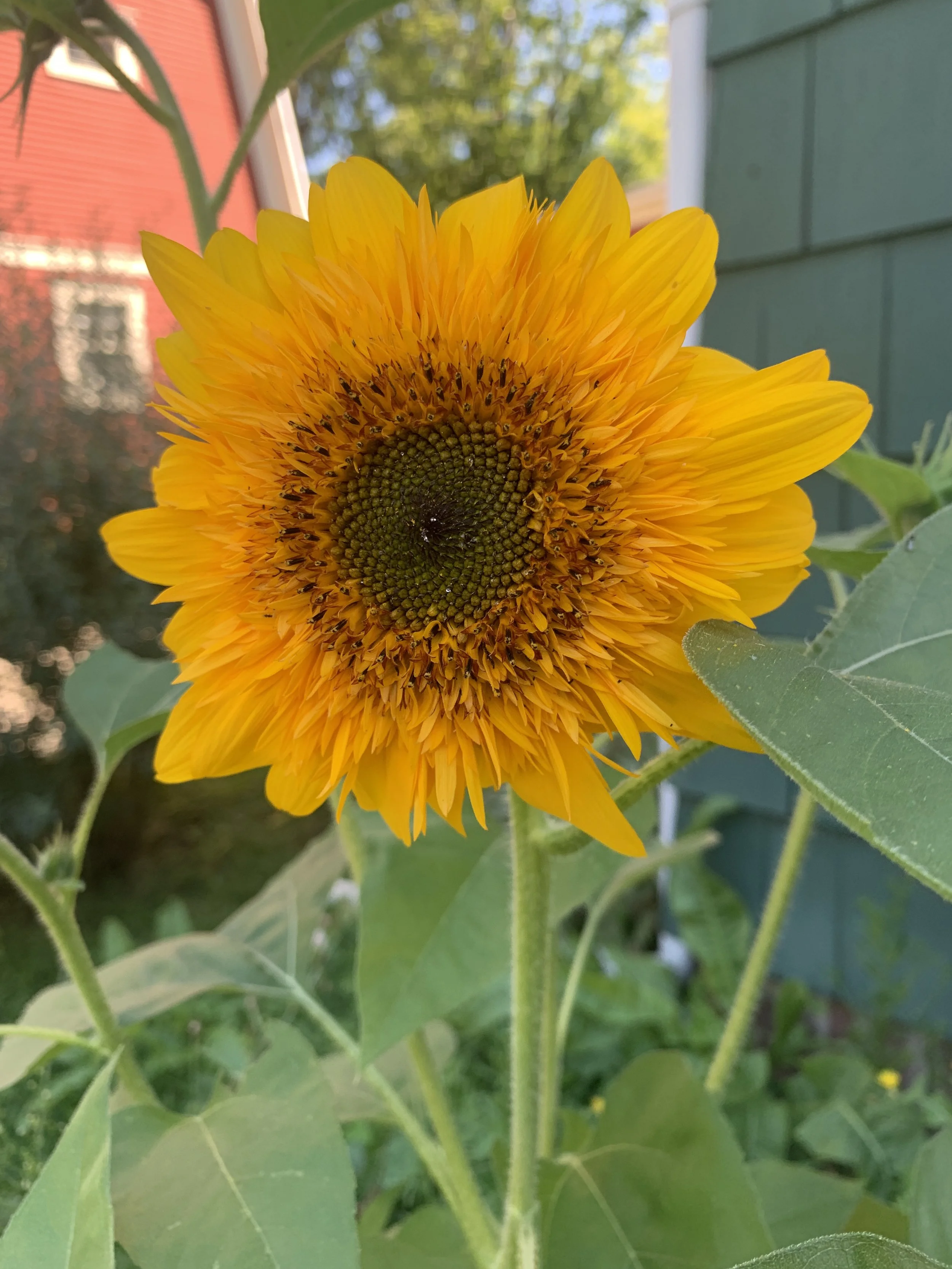
One sunflower bloom (inflorescence) consists of hundreds of flowers (florets). Sunflowers Grow florets in two forms: capitulum flowers and corolla flowers.
The Disk: Capitulum Florets - hundreds of 5-petaled, epigynous, tubular flowers.
The Ray: Corolla Florets: the petals - groups of fused petals creating sterile, ray flowers.
Angiosperms (flowering plants) create an inflorescence to hold their floret(s). Sunflowers, along with all flowers in the Asteraceae family, are composite flowers. Composite flowers have multiple types of florets on one inflorescence (bloom).
The Sunflower’s inflorescence structure is called a head. Other types of inflorescense types include solitary (tulip), raceme (delphinium), and umbel (allium).
Anatomy
The flowers on the head of the flower start as male and then become female! The Disk Florets form both male and female Organs at different times during the growth cycle.
Corolla Florets - groups of outer petals are fused together to make multiple sterile flowers around the head of the sunflower, used to attract pollinators to the capitulum.
Capitulum Florets - the inner disc has hundreds of spiraling flowers that open from the outside in a spiraling sequence towards the center of the sunflower’s bloom.
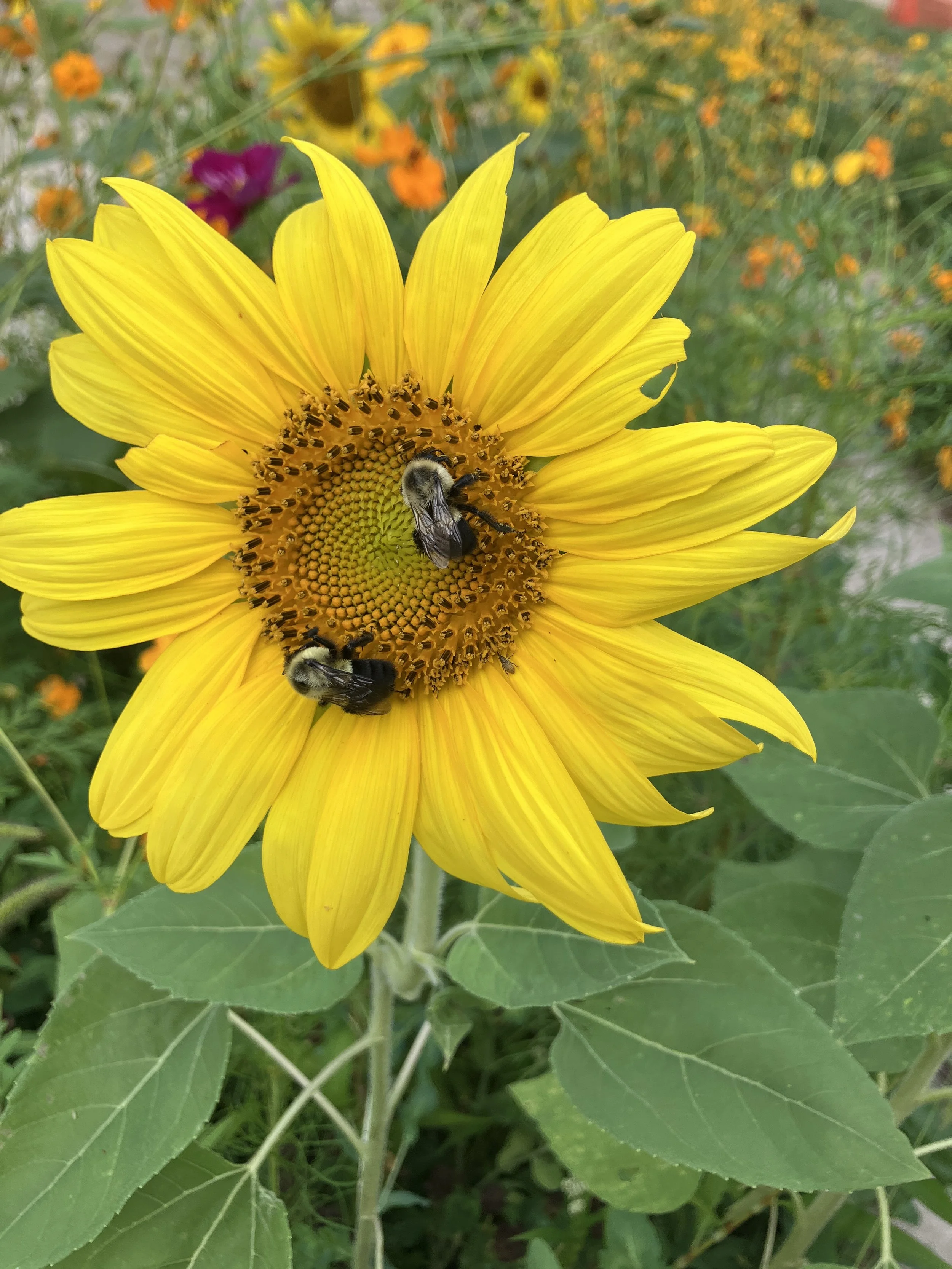
Cultivar List: The Common Sunflower
Helianthus annuus
American Giant, Arnika, Autumn Beauty, Aztec Sun, Black Oil, Chianti Hybrid, Claret, Dwarf Sunspot, Evening Sun, Florenza, Giant Primrose, Gullick's Variety, Incredible, Indian Blanket Hybrid, Irish Eyes, Italian White, Kong Hybrid, Large Grey Stripe, Lemon Queen, Loddon Gold, Miss Mellish, Monarch, Mongolian Giant, Moon-Walker, Munchkin, Orange Sun, Pastiche, Peach Passion, Peredovik, Prado Red, Red Sun, Ring of Fire, Rostov, Russian Giant, Skyscraper, Solar Eclipse, Soraya, Strawberry Blonde, Sunny Hybrid, Sunsation Yellow, Sunshine, Taiyo, Tarahumara, Teddy Bear, Thousand Suns, Titan, Valentine, Velvet Queen, Yellow Disk.
(Bold = successfully grown by Mother Plant)
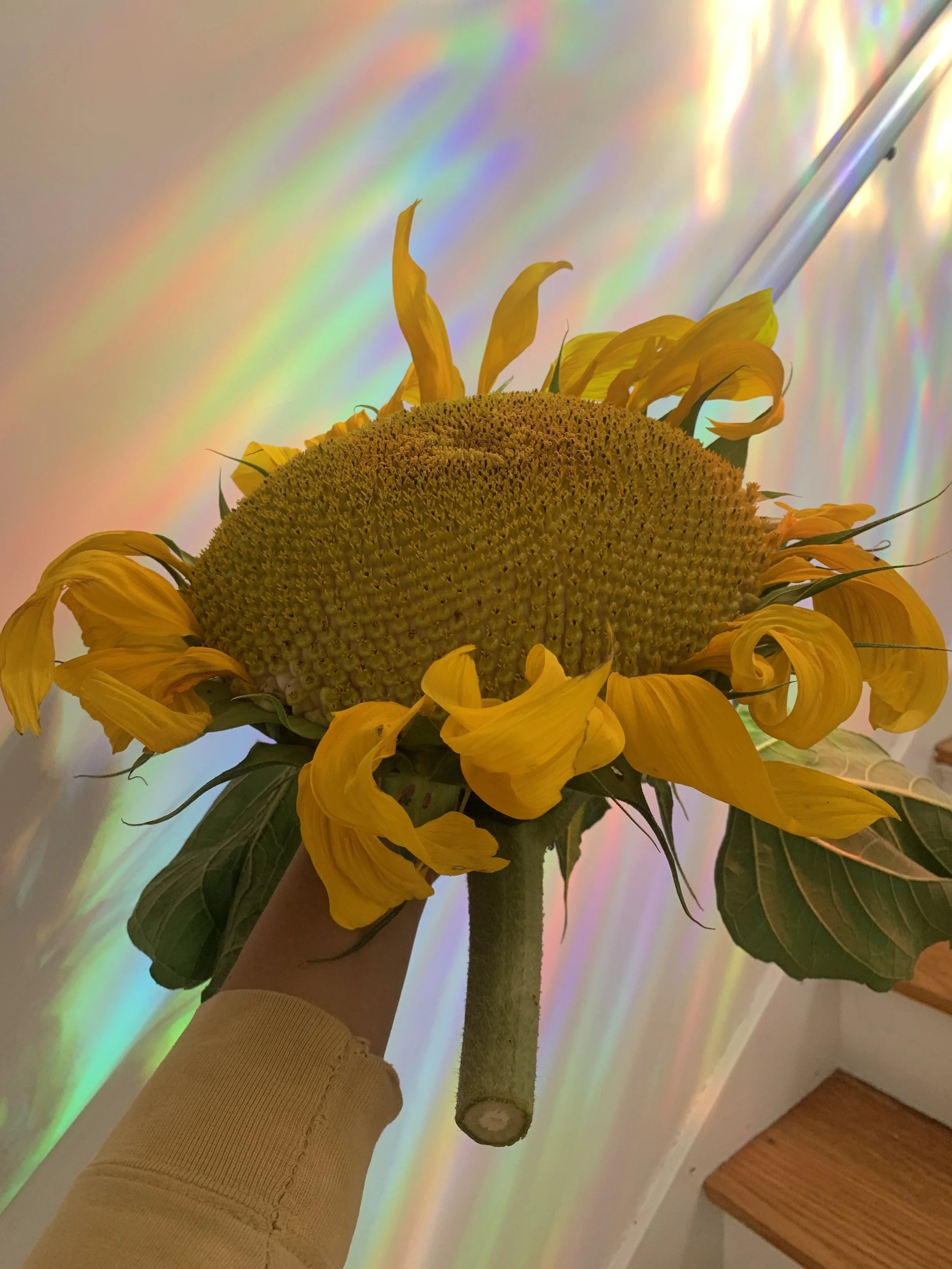
About the Cultivar
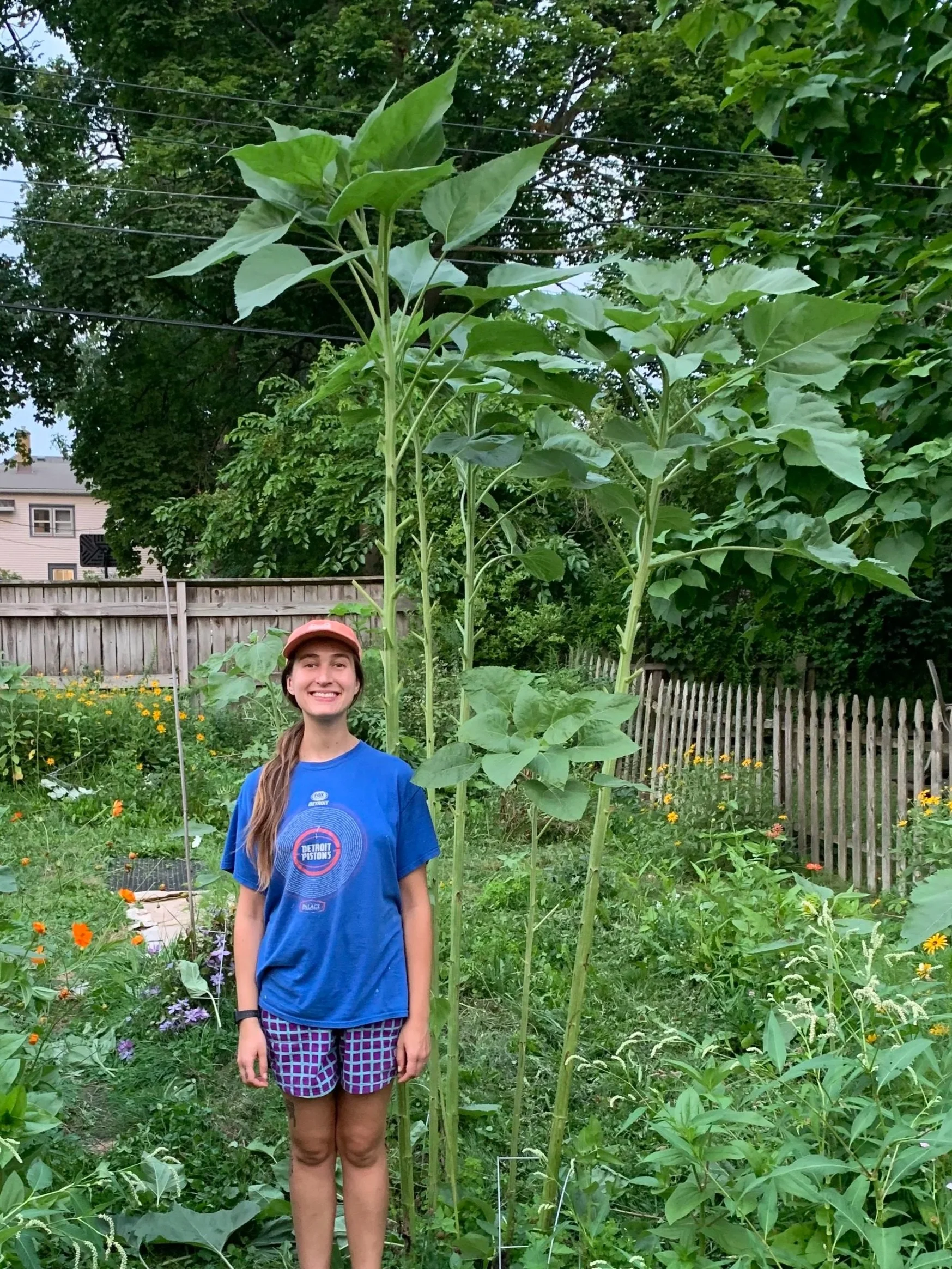
Mammoth Sunflower Helianthus annuus ‘mammoth’
Sprout Stats
Genus: Helianthus
Species: Annuus
Cultivar: Mammoth
Latin Name: Helianthus annuus 'mammoth'
Common Name: Mammoth Sunflower
Height: 10-36’
Spacing: 5 Inches
Germination: 70F/23C
Sprout: 5-7 DAYS
Bloom: 75-100 DAYS (15 Weeks)
Seed: 145 DAYS
Light: 6+ Hours
Credentials & References
Looking to grow sunflowers for an event? Unsure if sunflowers are the right species for your yard? Book a garden consultation with Mother Plant to recieve hands-on help from your fairy plant mother, including a suggested species guide, gardening spreadsheet, and exclusive access to the secret seed stash!
Gardening is a science — not a guess!
Michigan State University Extension Foundations of Gardening Credential ID 478850523155.
References: Mother Plant’s Grow Guide: Sunflowers
Petz, S. (2009). Certified Florist Professional Certification Manual. Michigan Floral Association.
https://plants.ces.ncsu.edu/plants/helianthus-annuus/
https://extension.umn.edu/flowers/sunflowers
https://onlinelibrary.wiley.com/doi/abs/10.1046/j.1439-037x.2002.00526.x
https://seeds.ca/pollinator/bestpractices/sunflowers.html
https://nwwildflowers.com/flora/?t=Asteraceae+tribe+Heliantheae+subtribe+Helianthinae
https://www.sare.org/publications/manage-weeds-on-your-farm/common-sunflower/
